
“You’re wrong, INMATE! He isn’t your responsibility. The more pressing question I want YOU to asks YOU is… WHY DO YOU CARE?!”
I was asked in an accusatory tone by the laziest, most unqualified individual I had ever had the pleasure of knowing. He adjusted his glasses, snorting, and glaring at me from behind his desk. He hated and had animosity towards me (and prisoners in general, for that matter), the reason I had been dreading having to deal with my counselor that morning.
A mixture of flatulence, poor personal hygiene, and cheap uninspired deodorant assaults my senses as I enter his small office. My intrusion momentarily pulls him away from his “work.” He scoffs at me before attempting to scold me as if I were a child, WHAT! – DO! – YOU! – WANT!” Not really a question. So, I didn’t answer. He scoffs again, before turning off his computer screen and the half-finished level of Angry Birds he’d been playing. Cursing and mumbling under his coffee breath. This (at the time forty-eight-year-old) man bites his tongue, wanting to check this dude, but my pride had to be pushed to the side, my friend needed me.
I went on to explain that my friend BJ and the cancer he had been battling for the past six years, had finally reached the point in the fight when the winner and loser were no longer in question. He had slowly declined and had regressed from having to used crutches, to a cane, to a walker. And finally, he was securely attached to a wheelchair. He had lost the use of his legs, had to wear diapers, and now his arms were beginning to rebel against him as well. To put it bluntly, my friend was about to die.
I went on to explain how I had to physically pick up my friend and sit him down onto the metal bench in the handicap shower so he could sling body wash onto himself, trying to hold on to what dignity he had left, without having to ask someone for more help. Three surgeries. A colostomy bag. Half of a cancerous liver removed. Black spots on both lungs. The colon cancer he has is winning and spreading, coiling and wrapping around his spine and other organs. Damn.
“Mister Simpson, we can no longer afford to keep prolonging your life. We need for you to sign a DNR and we promise to keep you comfortable with pain management until we reach a conclusion,” they told him one day up at medical in front of me. “What does conclusion mean?” BJ quietly asked me, thinking that conclusion meant he could go home. I didn’t know what to say. How was I supposed to follow that? They had just told this man that keeping him alive was costing the taxpayers of Pennsylvania too much money. That he would have to die, because continuing to live just wasn’t in the budget. Like he had become a burden on the system by becoming sick with cancer. As if he had a choice in the matter. Like he could have somehow talked his DNA out of betraying him by trying to slowly kill him in the most painful and inhumane way possible.
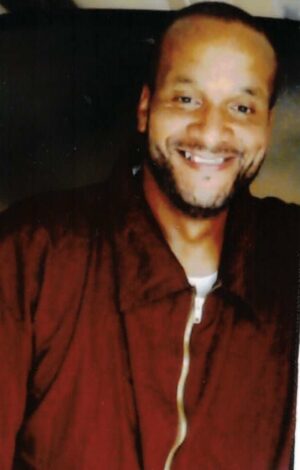
I went on to explain to my counselor, that my friend didn’t want to be sent up to the infirmary to live. I explained how afraid he was, and how he didn’t want to be alone and away from his support system on the block. I had known this man for more than 12 years, and he had always been the kind of person who would give you his last ramen soup if you asked him for it. BJ was kind, friendly, and his gap-toothed smile could light up any room.
So, I wanted to help him out in any way that I could. He wasn’t serving the same type of sentence that I was, but the way things were looking, we would both, unfortunately, be leaving prison one day in a body bag. So, I went on to explain to my counselor, that I would be responsible for BJ. I would take him everywhere he needed to go, including all trips to medical, and that I would even help the nurses lift him up onto the X-ray if necessary. I would make sure that he ate and bathed and that he was comfortable on the block. He didn’t have anyone else that he trusted. He had chosen me to care for him. I felt needed.
When BJ asked me if I would become his wheelchair pusher, his voice was slurring from the narcotics and other pain management he was on. I could see the tears streaming down his face, as he looked up at me from that damn chair. He wasn’t my blood brother, but I felt responsible for him, the same way I felt about my own siblings. I told him that I had his back and that he could depend on me. I didn’t want to get paid for pushing him around and I never asked him for anything. I was just doing a solid for another condemned man, a man who I had once seen bench press over 400 pounds, that same man who now struggled to lift a paper cup of water up to his lips.
So, when the counselor said to me, “He isn’t your responsibility” and asked me, “Why do you care?” I was offended. Like a person who was convicted of conspiring to take another person’s life and sentenced to die in prison, wasn’t capable of showing empathy or compassion toward another human being. As if I was planning something or had something to gain and was just pretending to be a good person. Like a person who had been serving a life sentence for more than 20 years couldn’t grow and mature and become something more than the selfish and ignorant criminal that put him in prison. Then surely, I wouldn’t be in prison if I was capable of… love.
“He’s my friend!… No… my brother!
And he’s dying of cancer!
He’s dying and you people don’t give a damn about him!
That’s what makes him my responsibility!
That’s why I care!
I care… because you don’t!”
I blurted out, frustrated and sick. And tired of being tired. I was now standing with my fist clenched behind my back. ” Please take your seat,” my counselor calmly insists, before slowly rolling his chair back closer to the bright-red panic button mounted on the wall behind his desk. I didn’t want no smoke. I remind myself why I had come to see the man in the first place, then comply. After sitting in silence for what seemed like an hour, I apologized for my outburst and calmly explained that I was just trying to be a good friend. That I never meant to raise my voice or act in a disrespectful or hostile way towards him, I was just frustrated and a little in over my head. “I’m sorry,” I reluctantly said.
He accepts my apology and tells me that “We all have bad days.” He continued, “I understand your concerns, believe me, I do. But they have nurses and other care providers up there at medical to assist him. And like I was saying, he’s not your problem.” The conversation ended with that. After losing my cool the way I had, I knew better than to press my luck by debating with him further. We both knew the falsehoods in his statement. There was no need to argue over the particulars. My friend wouldn’t survive another 90 days up there. Up there, where there were no witnesses. They just wanted to hide him away so they could finish him off, I wanted to say but didn’t.
“So… tell me again why he doesn’t want to love at medical…” he asked me again. I kept my eye contact but said nothing. This, all this, had been a big waste of time. The phone rang and I excused myself. I returned back to my friend’s cell and knocked on his cell door. BJ struggles but manages to maneuver the wheelchair he’s trapped in over closer to the door. A fake smile is etched on his face. The constant and intense pain he’s in evident. I let out a fake laugh and manage a fake smile of my own, as I fight back the tears that are rapidly pooling in my eyes. “So… What’s the verdict? What did he say? BJ asked, already knowing the answer. I don’t have it in me to say the words. ” You’re good, Homie…” I lied.”
The End
(R.I.P. Bobby Simpson, Jr.)




No Comments