
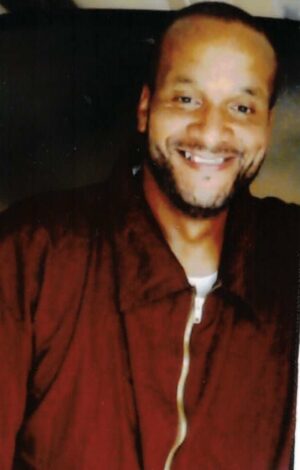
For more than a decade, Reggie Jackson struggled in silence, trying to adjust to the strange world he now found himself trapped in. A life-long sufferer of severe depression caused by a bipolar diagnosis as a teen, Jackson battled to find a reason to keep himself from ending it all. He would constantly proclaim and profess his innocence to anyone he believed could help him out of this vast ocean of hopelessness he was adrift on. But no one cared. Suicide seemed like the better option. How was he supposed to spend the rest of his life in prison?
From the moment Jackson entered the state correctional institution at Graterford for processing, one thing became apparent; the mercy and compassion once available to him at Pennsylvania state mental hospitals on the outside, did not and could not exist in this place.
“I had been receiving mental health treatment for my chronic depression my entire life before coming to prison. On the streets, there was always a place you could go to get your mind right, you know what I’m saying? But when I got to prison, whenever I would ask to see a psychiatrist or a doctor, the security staff would get angry with me, and things would just spiral out of control from there,” Jackson recalls. “But we’re talking about the Eighties … so mental health, any kind of health treatment in prison … was basically unheard of.”
After processing, many incarcerated citizens dealing with mental health issues, are shipped to other prisons across the Commonwealth, and further away from their families and other support systems. “I was shipped from Graterford to SCI Camp Hill, then from there I was sent to SCI Western … all the way over to Pittsburgh! I had never even been out of Philly before I got convicted. I was shook-up and confused for a while after that. I sank into a deep depression, and had even started hearing voices. I began isolating myself in my cell, not showering, not eating regularly, and kept my contact with other cons to a minimum. That’s when they first put me on psychiatric meds,” Jackson said.
Since the 1980s, the Commonwealth of Pennsylvania has acknowledged that limited, involuntary state-run psychiatric care in sanitariums for people with serious long-term mental health issues is inferior to community-based care. Prior to 1980, individuals with physical health, mental health, or substance abuse disorders were routinely housed in state-run residential care facilities. But change was on the horizon.
According to Spotlight PA, Pennsylvania soon devised a plan to close all remaining state-run residential mental health facilities. All progress made prior had abruptly stopped, while county jails and state prisons now filled the void left after the closings. In 2026, the number of people in Pennsylvania with mental health needs, as well as the acuity of those needs, have increased in county jails. Rates of suicide are also on the rise amongst people on psychiatric medications while in state custody. All parties involved admit jails and prisons are not suited to fill the needs of the affected.
In a recent report from Leonard D. Schaeffer Center for Health Policy & Economics, people living with mental health illness are more likely to encounter the criminal justice system, resulting in a large number of arrests and incarcerations. According to the report, the overall annual cost of incarcerating people with serious mental health illness in state prison in Pennsylvania exceeds $140 million annually.
The study also revealed, that despite the relatively large per-capita number of mental health care providers in Pennsylvania compared to the rest of the U.S., there is still a shortage of providers, particularly in the criminal justice system. In Pennsylvania state prisons, approximately 25% of prison inmates previously have been diagnosed with serious mental illness, which is higher to the overall U.S. prison population. Many patients have been diagnosed with two or more mental illnesses, confirming the presence of overlap in symptoms in this population.
FILLING THE VOID WITH PEER SUPPORT
According to Lynn Patrone, M.Ed., director of the Office of Mental Health Advocate in the Department of Corrections (DOC), the void once left after state-run residential mental health facilities were closed, coupled with the shortage of mental health professionals, can be filled by competent and certified peer support.
“In 2012, under the leadership of former Secretary of Corrections John Wetzel, was implemented one of the first comprehensive Certified Peer Support Specialist (CPS) programs in a prison setting … this program is part responsible for changing the culture surrounding mental health and wellness in prison,” Patrone said.
Through shared lived experience between the peers and the wellness and recovery they model, the PADOC CPS program is designed to inspire hope in incarcerated citizens that recovery is possible. Peer support workers promote empowerment, coping skills, personal responsibility, personal accountability, compassion, self-determination, and resiliency through mentoring and advocacy while providing support.
“Most importantly, peers provide support and empathy that comes from having experienced mental illness and now being in recovery while living in a very challenging environment …as the mental health population increases, this service is becoming an invaluable tool in meeting the needs for those living behind the walls,” said Patrone.
Of particular importance is the unique support a CPS worker provides during a crisis situation. Sometimes working as interveners, a peer may be asked to engage with individuals in crisis, to help de-escalate the situation. Kevin Jones, age 47, has been a CPS for the past five years, and has seen the benefit of having a program such as this. He believes the CPS program and its workers, have stopped many individuals in crisis from harming themselves or others.
“The first time I got called to talk to someone in crisis … he was already at a ten and had already decided that he was willing to die that day. I approached the cell to find a puddle of water at my feet, and a barrage of curse words and threats being hurled in my direction … but after just minutes of standing at his door silently listening, and letting him vent and calm down, he eventually cuffed-up and allowed the guards to move him to an observation cell. Before I got there, those chain of events just weren’t going to happen,” said Jones.
The DOC launched its CPS pilot program in six institutions in 2012, after securing Federal Recovery Act Justice Assistance Grant (JAG) program funds. Most of the funds were specifically for CPS training for inmates at the pilot sites across the Commonwealth and for training Supervisor staff who oversee the peers at the institutions.
In addition to the criteria of lived experience, a CPS must:
- Have had mental health services while incarcerated or in the community
- Have fulfilled evidence-based personal recovery
- Not have had any assaultive misconducts in the prior year
- Have a high school diploma or GED
- Be 2-3 years from their minimum release date
- Complete all CPS training
- Pass a Pennsylvania Certification Board test
In an effort to promote healthy well-being and support for long-time offenders, the PADOC has allowed incarcerated citizens serving life and virtual life sentences to work as Peer Support Specialists. A common statement heard from this segment of the prisoner population, is that becoming a CPS has not only given them an opportunity to financially support themselves, it has also given them purpose.
“When I first came to prison, if you were having problems adjusting because of your mental health, all they wanted to do was give me psych meds and lock me down, said Frank Justiniano. He is currently serving a virtual life sentence, and has worked as a CPS for four years. “When I took the training to become a CPS, my anxiety and need to take medication became less and less … I had learned vital coping skills while getting trained, skills I now use to assist others who may be in or about to be in crisis. I can honestly say, I’m proud of myself. I’m not just doing time, becoming a CPS has given me a purpose,” says Justiniano.
Jones is also grateful for the opportunity to work as a CPS. “Because I’m serving a life sentence, they (DOC) usually don’t invest too much time, money, or energy into educating people like me. I guess they figure what’s the use, you know… that’s why when they approached me at SCI Dallas about becoming a CPS, I jumped at the opportunity. I was already a mentor and group facilitator, running groups and teaching guys how to read on the block during dayroom. Becoming a CPS just seemed like something I’d be good at. I have been down almost three decades, so I know how prison can destroy a person’s mental health … when I was ay my lowest, there wasn’t always someone around to talk to, someone who cared enough to listen. I’m just glad to be able to help in any way that I can. I love my job,” said Jones.
In the 1980s, the Commonwealth of Pennsylvania attempted to fix a “broken” mental health care system by closing the only safe and humane option available to them at the time. Jails and prisons became the dumping grounds for thousands of mentally ill citizens, places that were ill-equipped to handle the number of individuals who would need life-long mental health treatment.
With a shortage of mental health professionals within the PADOC, former Secretary of Corrections John Wetzel implemented a peer support program, which has proved to be an effective mental tool for the Department of Corrections. But not all concerned believed it could work. “Initially there was resistance from Superintendents and security personnel, but as staff saw benefits, it became clear that peer work began to transform the inmates and those they support,” said Partone.
More than 80 percent of state prison inmates will one day return to society. The CPS program gives successful program reentrants the chance to become a CPS recognized by the Pennsylvania Department of Human Services and the Pennsylvania State Civil Service Commission. The benefits are invaluable and quantify the value of recovery for individuals receiving support from peer support that works.
“Prison may be an uncommon place,” Said Jones. “But wellness and recovery doesn’t have to be.”



No Comments