
After the 2025 strike left nine prisoners dead and prisons in chaos, New York turned to the National Guard. A veteran recruiter serving time inside DOCCS says the real solution isn’t more troops – it’s treating corrections like a mission worth joining.
In February 2025, corrections officers at 41 of New York’s 42 state prisons walked off the job. The strike was illegal, but the grievances were not.
Officers cited chronic understaffing, forced overtime, and the unintended consequences of the Humane Alternatives to Long-Term Solitary Confinement (HALT) Act, which they had said stripped them of tools to manage violence. For 22 days, thousands of incarcerated people remained locked in their cells with no visits, no programs, and minimal medical care. By the time the strike ended on March 9, more than 2,000 officers had been fired, hundreds more had resigned or retired, and the state had deployed thousands of National Guard troops at a cost that has now topped $1 billion and is still climbing.
Today, more than a year later, DOCCS remains short roughly 4,600 corrections officers and sergeants. Facilities operate at 70 percent staffing or lower. Overtime has exploded. Programs are still curtailed. And the National Guard – 2,700 troops at last count– continues to fill posts that civilians once held.
The crisis did not begin in February 2025. The prison population has dropped 53 percent since 2000 while security staff positions fell only 28 percent, leaving a structural mismatch. HALT, passed in 2021 to limit solitary confinement to 15 days for most infractions, removed some disciplinary leverage. Assaults on staff and inmates rose sharply in the years that followed. Officers felt powerless; prisoners felt the tension. When two men fought and returned to programs an hour later, or when verbal abuse of staff went largely unpunished beyond commissary and package restrictions, the message was clear: consequences had teeth removed.
The Human Cost
The strike and its aftermath did not spare anyone. Nine prisoners died during the lockdown period. Educational and vocational programs halted. Families lost visitation for weeks. Officers who stayed worked double shifts; many still do. The long-term toll is measurable: correctional officers supper PTSD at rates of 27 to 34 percent – more than double that of military veterans – and divorce rates far above the national average. Burnout, substance use, and early retirement have become the norm. Life expectancy for officers is roughly 16 years shorter than the U.S. average.
For the men and women inside, the shortage means more lockdowns, fewer rehabilitative opportunities, and a daily undercurrent of fear. Violence born of unpaid debts, territory disputes, or simple frustration over transfers festers because there is no quick, predictable way to separate combatants or reward calm.
What New York Has Tried – and Why It Has Not Worked.
DOCCS launched “Recover, Recruit, and Rebuild” with television ads, social-media pushes, and a lowered hiring age of 18 for non-contact roles. Commissioner Daniel Martuscello III offered $3000 sign-on bonuses, opened applications to out-of-state-candidates, and touted a 43 percent increase in academy graduates. More than 60,000 people expressed interest; roughly 20,000 became eligible.
Yet vacancies remain stubbornly high. The recruitment video that aired on local stations was slick in intent but hollow in execution’ generic footage of officers walking corridors, surface interviews, voice-overs about “making a difference,” and no glimpse of the real daily stressors or the tangible benefits that might actually move someone to apply. It raised awareness but produced few conversions because it was intrapersonal – broadcast to strangers – rather than interpersonal. Successful recruiting, as any military recruiter knows, happens face-to-face, in living rooms, at job fairs, and through trusted referrals. You cannot put the cart of mass media before the horse of grassroots trust.
Lowering the age to 18 and recruiting from New Jersey and Pennsylvania does little for prisons in central and northern New York – Attica, Five Points, Cayuga, Auburn – where travel distances make the job untenable. Double shifts keep the doors open today but guarantee burnout tomorrow. The state is paying soldiers overtime rates and hazard pay to do a job that civilians once filled, while ignoring the proven levers that attract and retain quality people.
A Recruiter’s Prescription
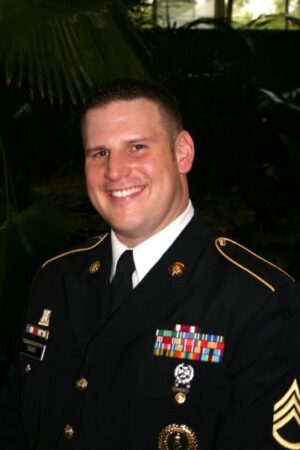
I have spent more than a decade studying exactly this problem. Before my incarceration in 2015, I served as an Army Recruiting and Retention NCO for over ten years, earning my Master Recruiter badge, teaching the Recruiting and Retention NCO Advanced Course, and was named the Strength Maintenance Training Center’s Instructor of the Year in 2012. I was dispatched to struggling states to diagnose recruiting and retention failures and fix them. I also hold an MBA in Marketing and briefly served in the New York Army National Guard’s (NYARNG) marketing department in Watervliet Arsenal. Now serving time in DOCCS, I watch the state repeat the very mistakes I once corrected in uniform.
The job of a corrections officer is not physically grueling like combat infantry. Many posts involve monitoring movement, pressing a button in emergencies, and sitting behind a desk. What it demands is judgment, de-escalation, and the ability to see potential in people who have made mistakes. That is a mission worth recruiting for – if you sell it that way.
Safety First – For Everyone
No recruiting campaign will succeed until prisons feel safe. Both officers and the vast majority of incarcerated people want the same thing; predictability and consequences that fit the offense. Proposed legislation tying good behavior to sentence reductions or expanded use of the Second Look Act would create carrots where only sticks exist now. Matching prisoners to facilities closer to family or preferred programs – using a “dream sheet” model like the military’s – could reduce the violence that stems from transfers engineered through assaults. Officers too, deserve preference assignments based on behavioral record and family needs, not just seniority.
Hazardous-duty pay for housing officers and direct-contact posts, modeled on military combat pay, would incentivize the hardest assignments rather than let officers swap shifts to avoid them. In Scandinavia, officers function more as mentors than guards; recidivism hovers near 20 percent in Norway, compared with 50 to 70 percent in the United States. New York cannot import Nordic culture overnight, but it can import the philosophy: invest in people who see rehabilitation as part of the job.
Building a Better Force
My blueprint draws directly from the NYARNG model that turned around recruiting shortfalls:
- Partner with SUNY and community colleges for free tuition or vocational training in exchange for a six-year commitment, with automatic pay-scale bumps upon degree completion.
- Offer student-loan repayment for those already burdened with debt.
- Create a $25,000 enlistment bonus for New York National Guard personnel who transition to DOCCS for six years – half paid after academy graduation, half after three years of incident-free service.
- Establish smaller reenlistment bonuses with each additional 3- or 6-year contract.
- Establish a two-year ready-reserve obligation after the initial contract so the governor can recall officers during future emergencies without keeping them on the payroll.
- Place first-year hires on strict probation with intensive oversight.
- Reward referrals: a $500-$1000 cash bonus to any CO or staff member whose candidate graduates the academy and completes one year of probation.
- Decentralize recruiting efforts. Every facility should have its own on-site recruiter-retention specialist who canvasses local communities, processes referrals, and tailors messages to what candidates actually want – stable pay, purpose, career growth – not generic “serve your state” appeals.
- Forward rejected or non-reenlisting NYARNG and New York Air National Guard (NYANG) applicants to DOCCS as a ready pipeline; many already know the prison environment from strike duty.
- Mandate independent psychological screening and target candidates with social-work experience, college degrees, or community leadership. The academy must train officers as mentors, not merely custodians, and screen out those who see the job as “just a paycheck.”
During my time in Attica CF (2015-2018), I watched a Scandinavian documentary crew film inside Attica, comparing our system to theirs. When officers were asked why they chose prison work, one replied, “It’s an easy paycheck.” The Scandinavian officer answered differently; “These people made poor decisions. My job is to help them learn from those mistakes so they can return to the community better than when they arrived.” New York needs more of the second answer.
The Bottom Line
The state has spent more than $1 billion on National Guard troops who volunteered for hazardous duty pay and still want to go home. That money could have funded the very incentives that built the Guard’s own ranks. Lower pay produces lower performance everywhere; New York’s incarcerated population earns roughly seventeen cents an hour, and the results show. Corrections officers deserve better – and so do the communities that will eventually receive released prisoners.
Safety is not a luxury. It is the prerequisite for recruitment, retention, and rehabilitation. Until DOCCS stops treating the workforce as interchangeable bodies and starts treating the mission as one worth joining, the cycle will repeat: more strikes more lockdowns, more taxpayer dollars funneled to soldiers who never signed up to be prison guards.
The playbook exists. I have used it to turn around recruiting crises across states. New York has the money. It has the National Guard pipeline. It has the desperate need. What it lacks is the will to stop broadcasting desperate ads and start building relationships – one qualified candidate at a time.
The prisons are not going away. The question is whether New York will keep paying soldiers to guard them – or finally recruit the officers who want to work there.
*All statistics drawn from official DOCCS reports, state budget documents, and peer-reviewed research as of April 2026.
- DOCCS Report on Security Staffing (2025).
- Corrections 1 coverage of strike costs and Guard deployment (Feb. 2026)
- NYS Senate and Assembly hearing transcripts on staffing (Feb. 2026).
- Wikipedia and contemporaneous reporting on 2025 corrections officers’ strike.
- National Institute of Justice and peer-reviewed studies on correctional officer PTSD and burnout.
- Norwegian Correctional Service recidivism data and comparative analysis.
- Haas’s personal account and military recruiting record (verified through public service history).


No Comments