
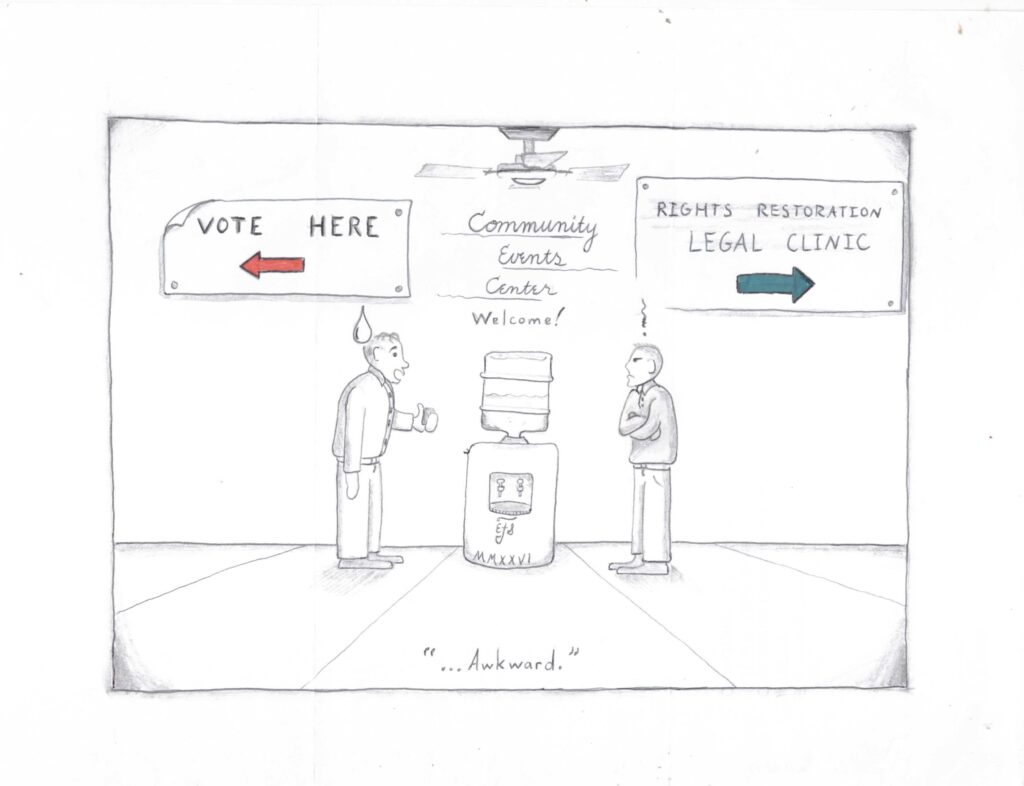
Learned Worthlessness
By Eric Sandefur
You can be taught
To give up all attempts
At escape, relief, release
Or, at least, it’s true of dogs
Whom researchers gave electric shocks.
This is called “learned helplessness”
But what does it say about us?
Can hope be quenched?
Can we be told to abandon ourselves?
Is there some finite amount of stress
That, according to the math of the moment,
Can logically divest us of all logic?
It seems what broke the dogs
Was not just the severity of the shocks
But also two more qualities thereof:
Unpredictability and inevitability.
Strong, senseless, unavoidable
Are the three vertices of a triangle
Of pain that will break an animal.
Milder shocks could be ignored or forgotten.
Contextualized shocks could be patterned or predicted.
Mutable shocks could be escaped or prevented.
But what did the dogs do
When they couldn’t ignore or forget the pain?
When they couldn’t figure it out or see it coming?
When they couldn’t get away from it.
Couldn’t do anything to stop it?
Nothing.
They just stopped and accepted the pain
And every time they felt another shock
They just sat there and took it.
Then, even when they were given multiple outs,
The dogs continued to accept the pain.
The pain had become conditioned, had been learned;
It became the new normal.
It was what it was
(And always would be).
None of the dogs in the experiment
Ever unlearned their sense of helplessness
Until the researchers physically removed them
From the shock zone.
What does that say about us?
We say (in many ways) that environmental stimuli
Are beyond our control –
“Storm clouds are thrice cursed,” or
“It never rains but it pours,” for example
It’s true, life is not easy.
But just because an environment
Created by humans
Is exceptionally large or complex or important
Doesn’t negate the fact that it’s artificial
And so neither beyond question nor influence.
Social institutions, no matter how well-regulated,
No matter how well-respected,
Are not acts of any god
Even if they are inspired by one.
They are neither immutable nor inevitable
No matter how strong they may be.
In an age when our technology
Allows us to alter entire ecosystems
And even the weather and climate,
We should never take the institutions we created
For granted.
Prisons are not thunderheads
And laws are not lightning.
And yet, after fifteen years in,
I think I understand
Why people stop trying to do better.
It’s true that some of us (at least at first) are
Unequal to the task of “learning”
From their punishment.
But the only time a person is
Ever treated exactly the same
In every way as another is
When they’re being discriminated against,
When their identity as an individual
Is denied them,
Everybody is different.
We each experience negativity in our own way;
We each encounter negativity differently
According to the things that make us different.
There are myriad algorithms
In every slur and slight
In each microaggression and dominance display
In “behaviour modification”
In “suspended privileges”
In “investigations”
In “population control”
In every cynical, bureaucratic obstruction
Of people’s lives and relationships,
Inflicted by respected members
Of the community.
Sometimes the math adds up
No matter what we say about it
But how often would you say
You’ve seen for yourself when it doesn’t?
Prison, just like life, isn’t easy
But prisoners are not the only reason
This is so.
To use our worst examples in retort
Is to malign us as a group
And deny us our identities.
Every human in a prison is a human
No matter what they’re wearing
And we all do stupid sh–,
Some more than others.
We all contribute to the environment around us
But only some of us actually control it.
So, what does all this say about the rest of us?
That we recidivize so much
Because we’re just so stupid, so evil?
That so many of us are unequal
To the task of learning
From the pains bestowed upon us?
How much of my pain has less to do
With my criminal propensity and
More to do with the fact that I’m a criminal?
How much can decades of institutionalized pain
Teach one person?
If my entire milieu is designed for discomfort
How am I to learn from negative stimuli?
How often is our punishment
Unequal to the task of teaching us?
What does this say about those of us
Who get excluded from betterment programs
Whose good behaviour is frequently “unmasked” as manipulation
Who cannot help but feel helpless
Whose biggest lesson learned from imprisonment
Is that they are worthless?



No Comments