
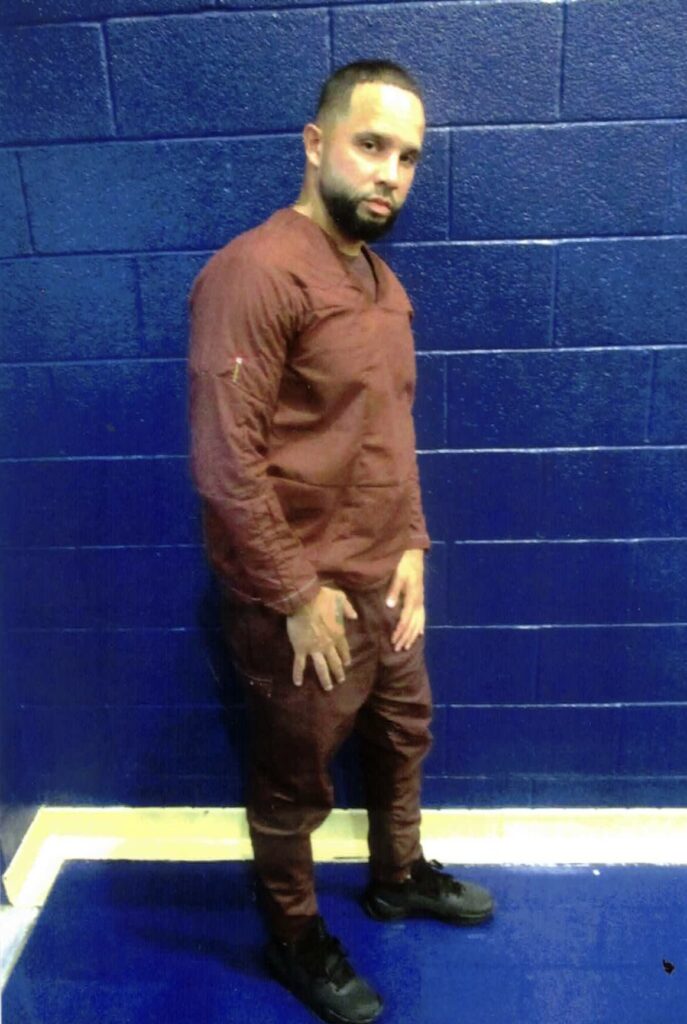
Life can have a way of literally putting you in a “box” you never thought or imagined being in. Have you ever imagined yourself facing time for the worst imaginable crime a person can commit. Now imagine for a crime you didn’t commit. We tend to avoid thinking these kinds of outcomes could ever happen to us because we want to feel safe. We want to believe that the justice system is secure, protective, unbiased, and undiscriminating. We’d rather believe the system is responsible, accountable, and conscious. My naivete was interrupted and my world turned upside down when I was forced to discover that there is a flipside to the justice system, the kind I never imagined myself being on. I’ve been incarcerated since 2013 for a homicide I did not commit and had no role in. As unbelievable as that may seem, I am learning that this kind of injustice is not mine alone and is more common than we want to believe. If you are like I was, you tend to believe this only happens to people who were, in one way or another, involved in the crime. You tell yourself, if the police arrested this person, then there had to be good reason. The media does an amazing job sensationalizing this narrative, making anyone apprehensive about one’s innocence and giving credence to the saying, “Guilty until proven innocent”. Other’s tend to feel justified in their biases/prejudices that since the defendant is of color, living in an urban community, not as educated and/or wealthy, he or she has to be guilty of committing other crimes; as if this ignorance justifies overlooking the possibility that the defendant could be innocent of committing the crime(s) he has been charged with. Sadly, others are too consumed in simply trying to get by to even have the time to think about or notice these possibilities. That is, until they find themselves on the “flipside of the justice system coin”. Either way, you’re not thinking this could ever happen to you.
So, what happens when one is wrongfully arrested and charged with a crime? Although the court system was designed to be the best vehicle for balancing the weight of the evidence and ascertaining the truth concerning disputed facts, in reality, it has become a game of which side can manipulate the facts the best to support their position wins. What does that mean for the wrongfully accused defendant who is unable to retain effective counsel? The one who is uneducated in criminal law and lacks the knowledge and the knowhow that comes from experience? Mainly that in an uphill battle, the odds are greatly stacked against him or her. On top of these odds, those that find themselves on the flipside of the justice system coin can expect to face the kind of evidence that is unreliable and questionable such as the use of jailhouse snitch testimony.
Jailhouse snitch testimony is arguably the single most unreliable type of evidence currently used in criminal trials. Now, consider the fact that jailhouse snitch testimony is likely to be the most influential, where the state has no other evidence or some other evidence of guilt, but that other evidence is weak. What better way to stack the odds against an accused. These are precisely the cases win which jailhouse snitches are most likely to be used. These are also precisely the same cases prosecutors do not burden themselves with determining whether the snitch’s testimony is truthful. Where the jailhouse snitch, and to some extent the prosecutor, is counting on the fact that his story cannot be disproven, as an innocent defendant, how do you counter against this kind of he says – she says hearsay testimony? Cross examination does little in impeaching a “confession” allegedly made by an accused. There is, of course, no way one could defend himself against these kinds of unverifiable accusations. You see, a legally unsophisticated jury has little knowledge as to the types of pressures and inducements that inmates are under to cooperate with the state and to say anything that is helpful to the state’s case. Consider also that there is no evidence that shows the counterweight of a jury instruction regarding the suspicious nature of a snitch is effective. Simply put, an accused who must face this kind of incriminating testimony is seriously and unfairly prejudiced when the jury comes together to deliberate as to whether he is guilty or innocent.
We don’t want to believe this kind of injustice exists even when we’re confronted with a glimpse, but we’ve all seen it. Think about it: we learn of the innocence of those wrongfully convicted through DNA evidence, which is so strong it completely and totally refutes juries, judges, and prosecutors. The odds were stacked against them and after their convictions, it took decades of incarceration before they were finally exonerated. It happens more often than we want to believe. These are just the cases where DNA evidence was present. A glimpse. Makes you wonder if those wrongful convictions would have resulted in exonerations had there been no DNA evidence at all. So, how about cases where there is no DNA evidence?
As someone who has been “boxed” in, I not only live in this unbelievable and unfortunate reality, but I am also now exposed to how often wrongful convictions are obtained. You see, it is not enough to proclaim your innocence to everyone you come across. In the obstacle course of the Pennsylvania appellate jurisprudence system, the appellate judges are ONLY concerned with whether your conviction was a result of your constitutional rights being violated, not your guilt or innocence. Unlike the prosecutor who has an unlimited web of resources, the burden now falls on the disadvantaged defendant to factually prove the merits of his case, not manipulate it.


No Comments