
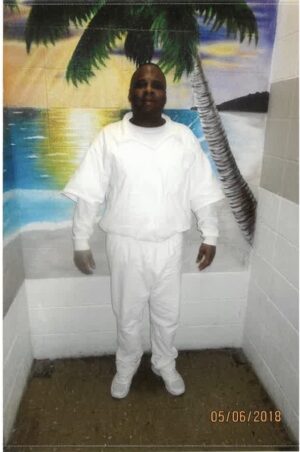
Michael Montgomery had a troubled childhood. Diagnosed as bipolar and with chronic depression at the age of eight, he was charged with capital murder and sentenced to life in prison when he was 14.
That was over 25 years ago.
Today, Michael spends the majority of his days teaching religious classes and providing spiritual counseling to incarcerated individuals at a supermax prison in Texas. It’s his way of upholding a commitment he made when he first entered prison to help as many people as possible in hopes of repaying his debt for the life he took.
“I took a life at the age of 14,” Michael said. “I made an oath to myself to spend the rest of my days on earth helping others enrich their lives.”
Michael is what legal experts classify as a “Juvenile Lifer.” That is an individual who was sentenced to a lengthy prison term at a very young age. During the 1990’s in what has been dubbed as the “tough on crime era,” prosecutors and judges increasingly certified juvenile defendants charged with violent crimes to stand trial as adults. Many of them were sentenced to decades in prison despite their age or mental capacity.
Criminal justice and children rights advocates groups have pointed to this practice of trying juvenile defendants in the adult judicial system as a key contributor to the nation’s current mass incarceration crisis and criticized it as cruel and usual punishment.
Collectively, these groups have spurred a new movement to bring justice to this matter called The Second Look Movement.
The Second Look Movement derives its name from the term “Second Look,” which is legislation authorizing judges to conduct a sentence review in cases like Michael’s. After an individual who received a lengthy prison sentence as a youth and has served a significant portion of that term, their trial court could conduct a sentence review to determine if it is still in the interest of public safety to keep that individual incarcerated.
Michael, who is now 40 years old and have served 25 years in prison, is hoping that this movement would give him a second opportunity to live as a free person again. After maintaining a good disciplinary record, obtaining his GED, successfully completing multiple chaplaincy courses, and becoming a college student, Michael plans to start a nonprofit to help inner-city youth avoid making the mistake he made.
“It’s basically what I already do here every day,” Michael said. “I want to be able to do it on the front end, before the kid ends up in prison.”
Numerous states across the country have enacted Second Look legislation. In addition to creating a coalition of lawmakers, activists, and community leaders called the Second Look Network, this movement has received assistance from the nation’s highest court. The U.S. Supreme Court’s decision in Graham v. Florida ruled in 2010 that sentencing a juvenile defendant to life without parole for a non-homicide offense as unconstitutional. In 2012, the high court extended those protections to juvenile defendants who were charged with a homicide.
In the State of Texas, where Michael is incarcerated, lawmakers have passed Second Look legislation, but it was not signed into law by the state’s Republican Governor Greg Abbott.
Michael still remains hopeful that his opportunity for a second look at freedom is coming.
“I’ve learned a lot over the past 25 years,” Michael stated. “I am a different person today. I teach redemption and I have faith that society will provide me with a greater opportunity to redeem myself.”


1 Comment
Michael Montgomery: The Second Look Movement & The Truth About Juvenile Life Sentences – JoinJeremy
October 30, 2025 at 10:26 pm[…] Read the full article here. […]