
According to the American Psychological Association, “Trauma is an emotional response to a terrible event like an accident, natural disaster, or being assaulted.” Trauma can take all types of shapes and forms – even excessive stress (like incarceration) can be traumatic.
When we feel traumatized, we may feel like we are no longer able to handle a situation. We may feel overwhelmed, numb, or like our sense of self is diminished. Trauma is not a sign of weakness or a response that we can choose or deny (we can’t strong-arm our way out of trauma). When we feel in danger, our brain will often automatically respond with one of the “four F’s”: Fight, Flight, Freeze, or Faint.
If we feel physically or emotionally threatened or harmed by someone or something, we may experience trauma. Whether or not an event is traumatic depends more on our reaction to it than the event itself. People have different reactions to the same events. What traumatizes one person may not traumatize another. Someone with healthy coping tools may experience trauma differently than someone without them.
Even trauma that happened decades ago can trigger us today in the most unexpected way. For example, say you were traumatized in your relationship with your father. He abandoned you in childhood – 30 years ago. Now you come across someone who’s wearing the same cologne your dad wore, and boom – you feel the same fear and anger you did as a child. In other words, you’re triggered.
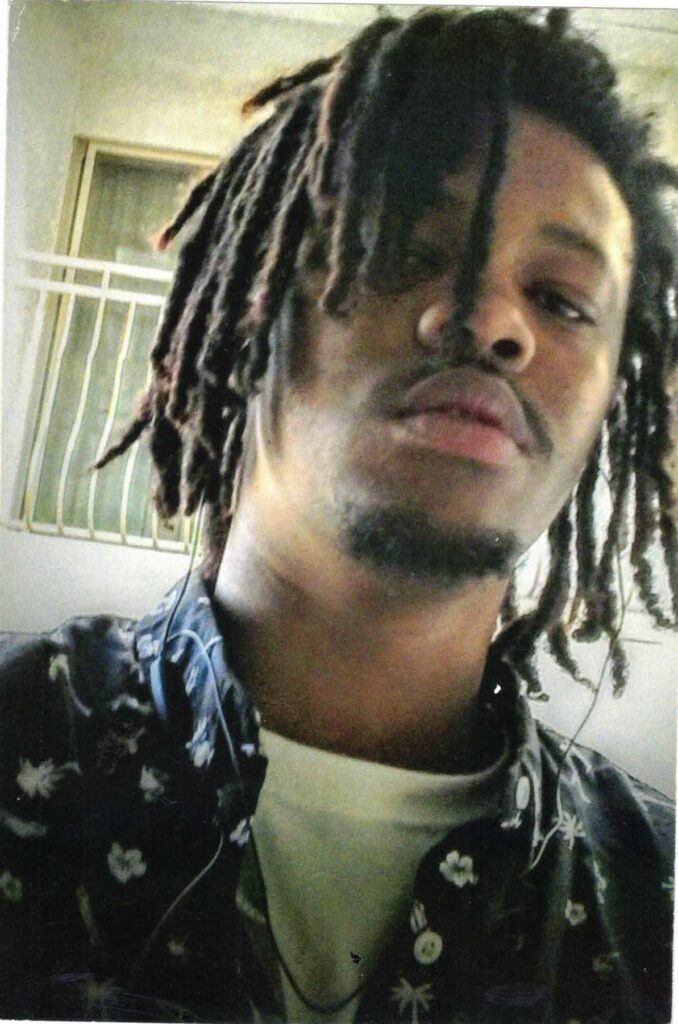
If you’ve read my poems (How It Started) and (The Walls I’ve Built), my memoir (My Introduction to Criminal Thinking) and my essay (Silent Child, Crying Soul) then you know my story.
I can remember back to a time where I had gotten kidnapped at gunpoint while walking down to a nearby barber shop, by rival gang members. Upon being captured, thrown in the trunk of a car and taken to an unknown location. I was vigorously beaten and tortured for days, then tied back to a chair. I remember my ribs feeling as if they were broken. I was untied then beat again. Then left there to die alone in an abandoned house.
At that moment, I felt like I was back in the bathroom of my step-father’s mother’s apartment, on 107th and Vermont. Locked in the bathroom as he beat me repeatedly for hours. Because my mother told him I had been suspended from school for fighting. Only taking breaks to catch his breath and beat me some more. In the darkened, still abandoned house, as I laid on the floor these rival gang members were my step-father, trying to burn the tattoo off of my hand with a lit black-n-mild cigar, their closed fists were my step-father’s blows to the back of my head as I tried to deter their attacks, their kicks to my stomach, legs and back were my step-father’s stomps. I couldn’t overstand why I was back on that bathroom floor curled up in a ball. It felt so real. I actually thought I was on his mother’s bathroom floor. I felt a deep sadness that I had always known. Back when I was living at Tana group home on 41st and Normandie. The exact same feeling that I feel today, like I’d lost all the amazing things in my life.
I’d never experienced anything like this. I’ve been sad about my lost time in prison, and I feel sadness when years pass by and I haven’t progressed or when prison administration fails to focus on rehabilitation as a primary goal, as opposed to punishment. But nothing quite like this. And my childhood trauma was triggered by this event.
I was panicking and told myself, “I need to leave.” I wanted to get as far away from there as possible. As I stumbled out of that abandoned house, I jumped over a brick wall. I stumbled down an alley retreating towards a street where I’d be safe. Once I arrived at 93rd and Budlong, I was shaking and in tears. I was obviously not on that bathroom floor on 107th and Vermont, but my brain and body convinced me I was. Even writing about my past and what I felt makes me feel like I’m broken.
It’s taken a long time to realize that I was traumatized by my childhood, as a teenager, and as a young adult. And that it’s not going away anytime soon.
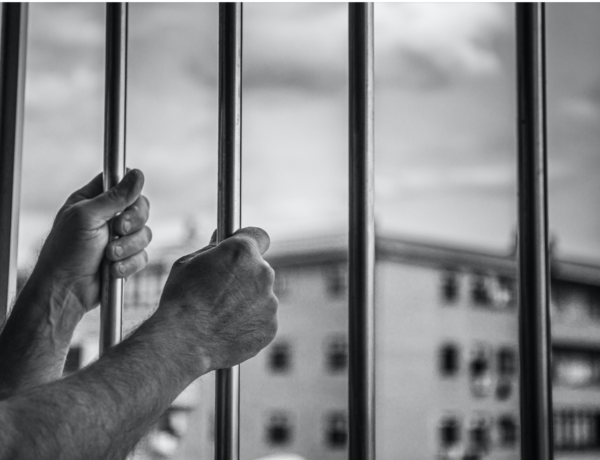
For the past nine years I’ve experienced a different kind of trauma, being incarcerated. Seeing a C.O. walk down the tier and pass out mail is normal. I am spoken to like I am less than human. Being referred to by a number instead of my name makes me feel worthless, like I have no value. When I hear people call me by my real name, Tyreall (instead of my prison number or last name), I almost feel like an imposter.
In prison, C.O.’s can take away every physical freedom you have. A C.O. could show up
for their shift in a bad mood and decide they didn’t want to open my cell door for me to
walk to chow. When this happened, I felt powerless. Every time a C.O. abused their power I thought, always be on guard because every cop and C.O. will abuse their power. They can take
my freedom any time they want, and they don’t need a reason to do it.
Since I’ve begun my journey towards redemption, the individuals outside of prison who I’ve invited into my life have been nothing but awesome and supportive. But as I continue on with my journey and as I get closer to my parole date, I’m terrified the parole commissioner will dump me and make me continue to waste my life as I sit in a prison cell for years to come. For what, I don’t know. I have a hard time sleeping at night and I’m anxious about restarting my life, rebuilding a stable foundation and building community relations in Northern Nevada. I’m scared that someone will commit a violent robbery in Nevada to where they’ll want to be tougher on violent offenders, making them rot away in a prison cell with no shot at obtaining their first parole. Because I have a violent history and I am currently incarcerated for two armed. robberies and attempted murder, I worry that no matter how much good I do to assist my peers in becoming better versions of themselves or what good I do in my own life, it won’t matter.
It has taken me a long time to realize that I was traumatized by my upbringing and my incarceration and that it’s not going away anytime soon. This trauma shows up at the weirdest times and is triggered by the smallest things. I want it to go away, but it won’t unless I face it and heal. Stuffing it down and telling myself to “man up” sure as hell ain’t helping. It’s hard to face my trauma because it makes me feel like I’m not normal. It makes me feel as if I am weak and flawed. I tell myself, Get over it! You’re almost free again. Why won’t you just be grateful that you’re still alive? You’ve survived living in South Central L.A. and countless gang wars. I remind myself that I could have gotten killed in the streets of South Central L.A. like Blacc, LiL’Reg, or LiL’ Moe 6. I know there are prisoners that would do anything to be where I am today, who have no chance at leaving this place alive. I don’t want survivors’ guilt or trauma to continue showing up when I’m released from prison and enjoying my life.
One tool I’m using to manage the trauma is by putting a “post-it-note” in my brain that says, “everyone you encounter isn’t out to get you, you don’t need to sell drugs or rob someone. You have marketable skills you can rely on and an entrepreneurial mindset, rely on your hustler’s mindset and find something that you enjoy doing that’s legit.”
Now that I’m learning some coping skills, my next step is more healing work. When I first started writing this piece, I had a hard time emotionally. The more I work on it and read it the less the trauma seems to take up space in my brain.
AUTHOR’S NOTE:
Because children’s brains are still developing, they are especially vulnerable to trauma. When faced with triggering events, children’s bodies flood with hormones related to stress and fear. When trauma is chronic, the extra stress can disrupt normal brain development, altering a child’s emotional development, mental and physical health, and behavior. This can lead to unhealthy coping mechanisms later in life.
When we experience trauma, especially chronic trauma, our bodies stay in a high alert, defensive mode. “One of the most devastating effects of this,” Bessel A. Van der Kolk, Author of The Body Keeps the Score: Brain, Mind, and Body in the Healing of Trauma found, “‘is not feeling real inside.’ When you don’t feel real, nothing matters. It’s impossible to protect yourself from danger or attend to your own needs. You may resort to extremes in an effort to feel something.” Sometimes to feel again, we seek out risky or dangerous situations, or find ourselves attracted to people who hurt us.
In time, the memory of the traumatic event may be more devastating than the event itself. The memory may be like a “splinter in the mind” constantly affecting us even when we are not consciously aware of it. We may remain on high alert, feel anxious for no apparent reason, or feel a sense of doom.
We can’t selectively numb, so when trauma causes us to shut down our negative feelings of pain, fear, anger, shame, etc., it simultaneously causes us to shut down positive feelings of
happiness, joy, excitement, and feeling fully alive.


1 Comment
Ruben Smith
December 31, 2025 at 4:44 pmHey, Tyreall! This is Ruben. I wish I could be there for you in person, but for now, I hope you can feel the hug I’m sending you all the way from the midwest! I’ve never experienced what you have, but I know what it’s like to freeze up in a trauma response and I wouldn’t wish it on anyone, especially you. You deserve so much better than the hand you were given. As awful and as disparaging your past was, I know you’re working your ass off to make life better for yourself and the people around you. Keep up the hard work, even though it’s tiring, and keep your head up.