
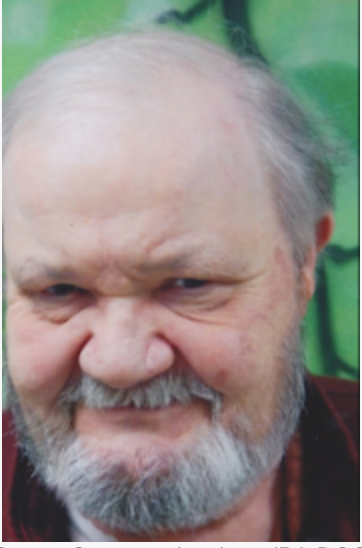
“Old Head” Neal O’Handlon, 78 years old, 18 years “down,” serving a death by time sentence for misconstrued act of self-defense, labors along the outside walkway – 300 yards to the medical ward, 300 back, 50 yards at a time – pants for breath, pauses to regain it.
It’s another gardenless June, no swimming or fishing, only persistent memories of his unconfined past, vivid recollections preserved in time of hay-making afternoons beside his father and Uncle Bob, forking the long windrows of hay onto wagon after wagon, his Granny tendering condensation-beaded glass milk bottles of cool spring water, sweating, joking, cursing, laughing and forking – always forking – until the last wagon was filled and the field raked clean. Riding atop the swaying load to the barn, the youthful doppelganger of the shuffling old man was happier than anyone in this oft’ times ruthless world had a right to be. Neal was young, the world and its appointments his playthings, and he knew in his heart that he would never grow old.
But that was a lifetime ago. Had that world really existed? Now life was just another burden to endure. Neal smiles wryly, inches another 70 – 75 steps, stops by a patch of buttercups and white-blossomed clover, looks for a good luck four leaf clover to carry back to his cell, press dry in a book, and mail to one of his three granddaughters, who live in a world amenable to lucky charms and Gaelic symbols of hope. Of the latter, Neal has none, will die among strangers. He pokes aside blossoms and stems, counts in vain the leaflets.
“Are you okay?” an approaching C.O. asks. “Can you make it back to your block?”
Neal looks up, nods his head. “I’m fine, I just need to catch my breath now and then” and maybe snatch a few happy memories from out of the jaws of time, he thinks. “I’ll be alright officer. Thanks for asking.”
The man nods doubtfully and walks on. The old head follows; only another hundred yards or so to go.
Neal pauses at another patch of yellow. The tiny flowers are all over the lawns between the cellblocks, recalls his uncle warning him not to chew on one like they chew on alfalfa stalks. “They’re poisonous Slugger, leave ‘em be.” Neal, not yet twelve, wonders why some of the most beautiful things in the world – coral snakes and jimsonweed, tigers and such, are deadly. The world and many of its ways are mysteries and he’s a detective, hungry for clues. But Neal finds none here, remembers the grass in his childhood yard and his father’s summer-long struggle to keep it baseball short, recalls the series of cheap-ass power mowers that constantly broke down or wouldn’t start, recollects the evocative scent of newly mown grass, the indefatigable grass that mocks its barber with its rapid regrowth. It too will never die, and Neal is okay with that, but his youthful self still wished it would enter estivation during baseball season!
Old head Neal chuckles, spits in the grass, gains another chunk of yardage, pauses to think of his adolescent friends, wonders how many are still alive, maybe think of him. Remember too the long summer days spent hitting flies, fielding grounders, running and running and running the bare dirt bases in Neal’s side yard, retrieving from the out-of-the-park woods their triumphant drives, plucking from the pasture creek their wayward liners to the verboten right field. They were “the boys of summer,” outside from après breakfast to dusk, watching the flitting bats stitch with erratic swoops the louring sky to the earth’s ragged hem. Yes, they were young with all of their might, but all their doings are now but memories, fated to be devoured by ever-ravenous time, nostalgia’s chief ally, and, at times, its fickle turncoat betrayer.
“You cool, old head?” a concerned fellow inmate inquires. “You want me to fetch some help?” Neal snaps back to the present, shakes his head no, thanks his would be benefactor, resumes his trek. One or two more breathers and he’ll be “home”, back in his one room, ground floor efficiency pad where a rarely mowed stretch of hawkweed speckled grass is visible through the above-his-bunk window. The tall swaying bright yellow hawkweed blooms are often mistaken for dandelions but are another lovely but toxic weed. Neal eagerly anticipates the welcome splashes of color upon the winter-dreary palette of the lawns, takes as proof of the aesthetic poverty of the bureaucratic mind the orders to the outside workers to pluck and bag the yellow sunbursts of color beloved by Neal, equates the dandelion-phobic lieutenants with the Nazi stormtroopers dispatched by frustrated artist Hitler to rid the museums of non-representative art. Such barbarians, Neal muses, were surely not of the country, never had Mother Nature for a nanny, nor knew the wildflowers as friends.
Lumbering along, Neal thinks of his Granny who instilled in him an appreciation for all of God’s creations. A devout churchgoer who had never tasted alcohol nor smoked a single cigarette, she fell prey to lung cancer in her 77th year. Overcome with grief, unsure of how to act, what to say, Neal put off visiting her in the hospital until she lay upon her deathbed. After murmuring a few words of sympathy, he held her fragile hand, regarded with horror her frail body, so insubstantial as to appear nearly transparent, listened with mounting distress as she described her near-death experience upon the operating table, sobbing that she had walked halfway up a golden staircase to heaven when her soul had been dragged back to a realm of pain and misery.
“Please, child, pray for me to die!” she pleaded, her eyes afire. “Free me from this awful prison, Neal, let me go home to my Maker!”
Aghast at her request, horrified beyond reply, he managed a sobbing, “I love you Granny!” before slinking from her room like a newly defrocked priest, weeping all the long drive home.
Two days later she died in a hospice, attended by strangers.
Neal swings his cane in a futile attempt to dispel the memory, proceeds towards his building. One more stop, one more jaunt down Memory Lane, then home. It’s a sunny day, not too windy, just right. Suddenly, he feels the onrush of a strong, oddly familiar sensation reminiscent of his only LSD trip, a serial opening of his spinal chakras as his soul departs his body, bursts from his cranium in a dazzling fountain of light. Just before he falls face down in the welcoming grass, he sees his beaming Granny summoning him from a vast green lawn sprinkled with wildflowers, a spring-cooled jar of sun tea under her arm, hears her cry, “The hay’s all in, child, come home!”
And like the good boy that he is, he obeys.




No Comments